How AI is supercharging gamification & immersive experiences

AI is opening new possibilities for gamification and immersive experiences, helping theme parks and family entertainment centres create more personalised, responsive guest journeys. The result? Experiences where visitors don’t just enter the story. They become the hero.
If you were a kid growing up on Australia’s East Coast in the 90s like me, chances are you have fond memories of summer holidays at Movie World, Dreamworld or another much-loved theme park.
My first visit to Movie World is still a vivid childhood memory. I left the Australian beachside behind and entered a world surrounded by superheroes and icons from the silver screen.
But for all the excitement and magic, I was still a side character. I was never the hero.
From visitor to participant.
Gamification changes that.
By introducing challenges, choices, progress and rewards, gamification can transform a visit to a theme park or family entertainment centre (FEC) into an adventure guests actively shape. Personalisation already plays an important role. Connected experiences can remember achievements, unlock rewards and guide visitors along different paths. AI can take that personalisation further.
Machine learning has long powered recommendations and predictions. Generative AI creates new possibilities, helping shape dialogue, clues, voices, images and video. When connected to a guest’s choices and progress, AI can help an immersive world respond directly to them.
Imagine a character recruiting your family to solve a mystery hidden throughout a theme park. You choose to help a missing explorer, unlocking a clue another group might never encounter.
Later, a character remembers your decision and explains how it changed your mission. You’re no longer simply collecting points. Your actions have consequences within the story.
AI-powered experiences that adapt to the guest
That responsiveness could extend throughout the adventure.
If your family gets stuck on a puzzle, an AI-powered guide could offer a hint based on your attempts, delivered in the character’s voice. If you’re racing ahead, it could suggest an optional challenge that takes the story deeper.
Conversational AI could also allow guests to interact with characters using natural language rather than choosing from a fixed menu.
A child might ask why the explorer disappeared or whether a mysterious symbol matters. Using approved story information and the group’s recorded progress, the character could respond without revealing the next discovery.
The creative team still defines the world, its characters and the boundaries of the experience. AI simply provides more ways for guests to interact with it.

Making immersive experiences more inclusive
Being the hero doesn’t mean playing alone.
A family adventure could give everyone a different role, with challenges and clues designed so the group has to work together.
AI can also help make immersive experiences more accessible to international audiences.
AI-assisted translation, voice generation and dubbing can support attractions in offering experiences across multiple languages while helping maintain a character’s voice and personality.
A clue, character encounter or end-of-day recap could potentially be delivered in a guest’s preferred language.
Good localisation still needs human oversight. Jokes don’t always translate, cultural references can lose meaning and word puzzles may need to be completely rewritten.
AI can support the process. Human creativity makes sure the magic remains.
Connecting AI, gamification and the physical world
For personalisation to feel convincing, the experience needs to remember what actually happened.
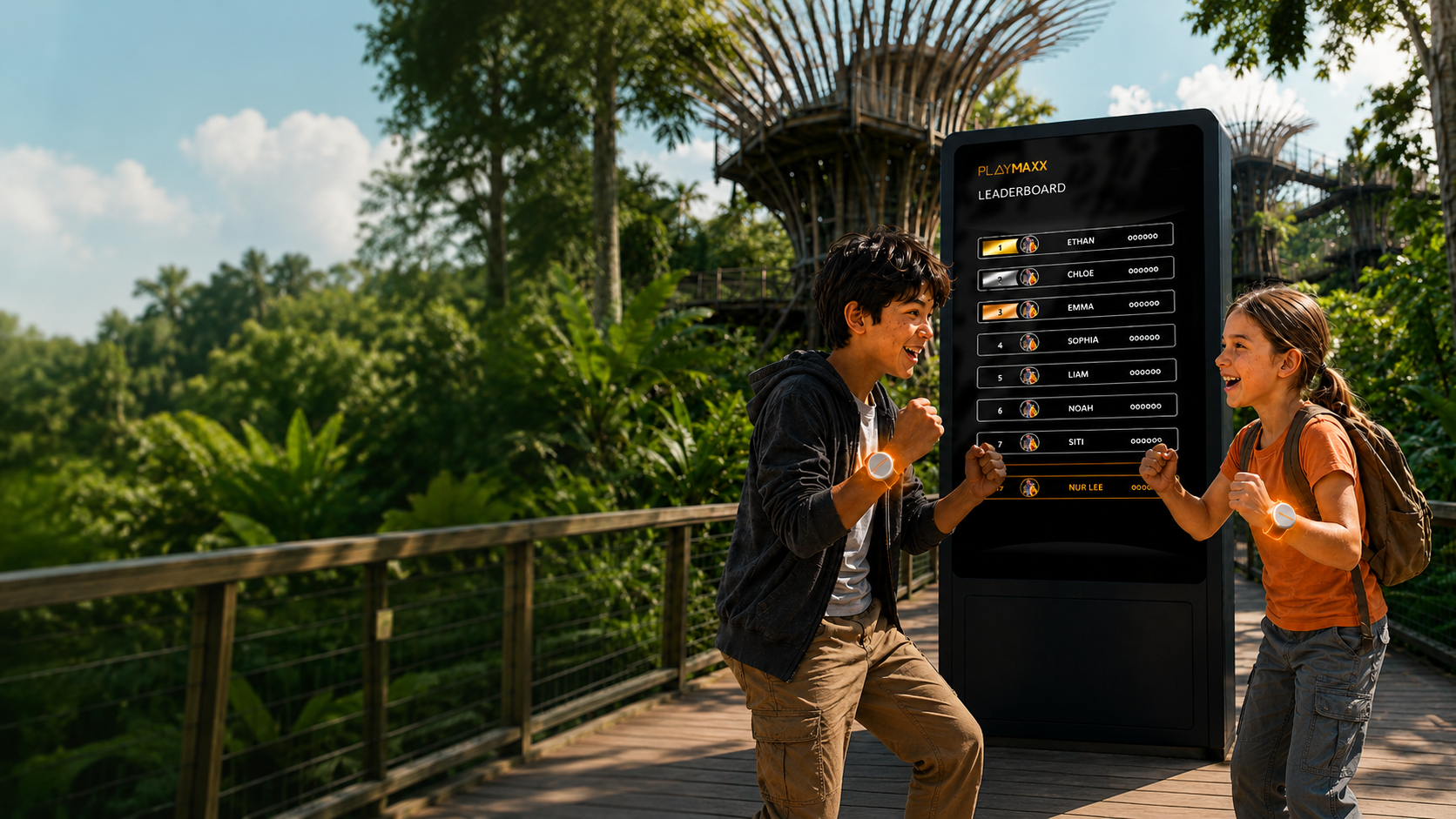
RFID wristbands, apps and interactive kiosks can connect guests with their recorded choices and achievements. The underlying system tracks progress and rewards, while AI can use that context to help shape what happens next.
Complete a challenge and a kiosk could acknowledge the achievement before suggesting your next mission.
Visit the gift shop and recommendations could reflect the characters or adventures you enjoyed.
Stop for lunch and a reward unlocked during your quest could appear when you scan your wristband.
Each interaction becomes part of a connected guest journey, keeping visitors immersed beyond the individual attraction.
Turning the guest journey into a lasting memory
When it’s finally time to leave, the experience doesn’t necessarily have to end. AI could help assemble selected photos and recorded achievements into a personalised recap of the day: the mystery your family solved, discoveries you made and moments where everyone played their part. It could even set up the next adventure.
Perhaps there’s an unexplored part of the world, an unfinished mission or a character who still needs your help. Suddenly, a return invitation isn’t simply another marketing message. It’s the next chapter of a story the guest has already started.
Technology should support the story, not overwhelm it. The temptation with AI is to create more of everything: more dialogue, more quests, more content and more messages. But volume doesn’t make an experience memorable. Writers, designers, performers and operators still give an immersive world its character. They decide what makes a challenge satisfying, when a surprise should land and when guests should simply be left to enjoy the moment. Technology should support those decisions, not replace them. I still remember the wonder of stepping into Movie World for the first time. AI gives experience designers new tools to build on that feeling, creating immersive worlds that can remember our choices, respond to our actions and invite us to play a meaningful role.
The guest is still the hero. Our job is to make their adventure worth remembering.

Christopher Hogben is a Creative Technologist with 16 years of experience designing immersive experiences, gamification programs, and interactive digital solutions. He has delivered projects for global brands including Salesforce, Amazon, IBM, and Atlassian, combining creative technology, storytelling, and experiential design to create memorable audience experiences.
Related Posts
How we’re mixing things up
Robots that help with event set-up? Pico launches innovation testbed with Accenture